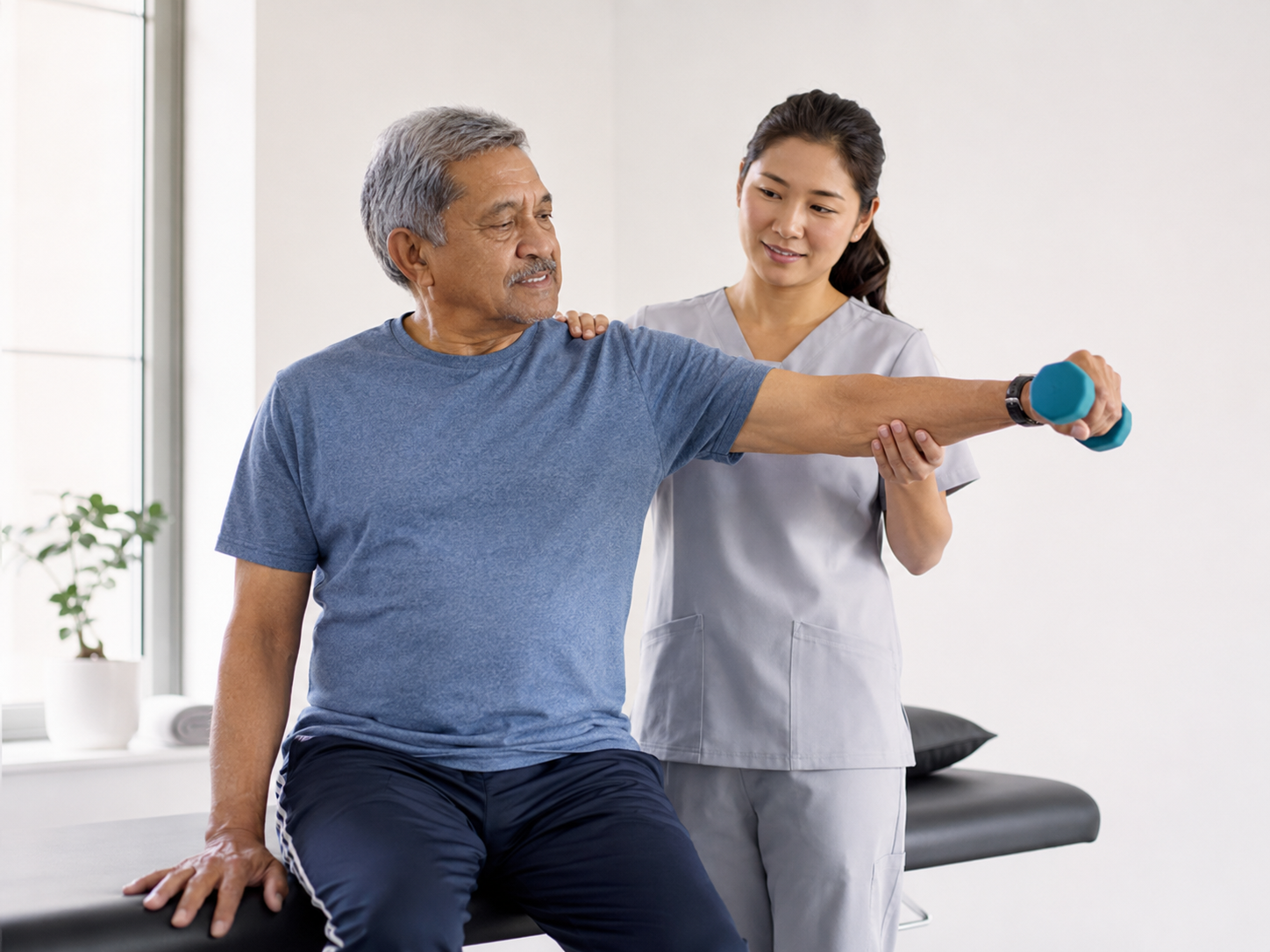
Neurological rehabilitation depends on precision and repetition. Kemtai's scientifically validated motion tracking records subtle changes in movement to support clinicians delivering rehabilitation exercise programs.
Traditional Challenges of Neurological Rehabilitation
Subjective Assessments
Traditional observation-based tools can lack the sensitivity needed to catch small changes in movement.
High Repetition Requirements
Effective practice requires high repetition and frequency, which is often unattainable through in-person sessions alone.
Need for Precise Measures and Guidance
Live and accurate corrective guidance is critical to ensure proper movement patterns.
Kemtai's solution is well-suited to support neurological-focused exercise programs
Precise Assessments
Assessments track movement patterns across 113 body points to identify granular movement, posture, and stability data
High-Volume Rehab in Various Settings
Rehab from any device with a camera ensures patients meet necessary volume thresholds, regardless of setting
Granular, Real-Time Guidance
Consistent cueing to ensure patients develop proper movement patterns
Technical capabilities that support neurological rehab’s unique needs
Detailed, Hardware Free Body Tracking
Tracking of 113 body points in any body position, without cumbersome sensor set-up.
Advanced Occlusion Handling
Stable tracking even for patients using assistive devices or passive movement assistance from a caregiver
Custom Assessment Capabilities
Tailored movement assessments that meet the specific needs of your patient population
Sample Use Cases:
Parkinson's exercise programs
Track movement and gait patterns with objective precision and deliver high-repetition exercise programs.
Post-stroke exercise programs
Capture movement quality across exercise sessions and deliver repetition-rich exercise programs.
Brain-injury exercise programs
Measure balance, coordination, and movement with objective data that helps clinicians configure exercise programs.
MS exercise programs
Record changes in movement and balance over time and deliver exercise programs that support ongoing physical activity.
Case Study: Shepherd Center
Shepherd Center, a world-renowned hospital in Atlanta, Georgia, ranked among the top rehabilitation hospitals in the United States, partnered with Kemtai to develop a computer-vision postural-measurement tool used during their care of people with brain injuries.